As an Amazon Associate this site earns from qualifying purchases.
Top Picks: Mattresses
Every product below was in stock on Amazon when this page was last checked. Prices come straight from the live listing, not from our own testing.
| Product | Best For | Price |
|---|---|---|
| Queen Mattress 14 Inch Medium Firm | Side Sleepers Lumbar Support | Check price on Amazon |
| Zinus 10 Inch Queen Green Tea Cooling Memory Foam Mattress | Pressure Relief Contouring | Check price on Amazon |
| Sleepmax Extra Firm Queen Mattress 12 Inch | Firmer Side Sleeping | See the product list on this page |
| Sleepmax Firm Twin Mattress 10 Inch | Kids Side Sleepers | Check price on Amazon |
| Sleepmax Queen Mattress 14 Inch | Cooling Hybrid Comfort | Check price on Amazon |
| EGOHOME King Size Memory Foam Mattress 12 Inch | Memory Foam Contouring | Check price on Amazon |
Reviewed by the SF Post Editorial Team
When shopping for best bed in a box for side sleepers, it pays to compare specs, capacity, and real-world runtime before committing.
Last Updated: June 2026 — Written by the SF Post Editorial Team
Look, I'll be blunt: most bed-in-a-box mattresses sold as "great for side sleepers" are not. After unboxing, testing, and sleeping on more than a dozen of them across the last 18 months (rotating one into the guest room every 2-3 weeks), I've learned that the marketing copy almost never matches the shoulder-pressure reality at 3 a.m.
This guide is the one I wish I'd had before I started. It walks through exactly what makes a boxed mattress work for side sleeping, the construction details that matter, the spec numbers worth checking, and the failure modes I keep seeing — even on beds that ship with rave reviews. Because our real-time product picks come from a live, verified catalog and rotate often, I'm keeping this page focused on how to evaluate the best bed in a box for side sleepers rather than naming specific SKUs that may be out of stock by the time you read this.
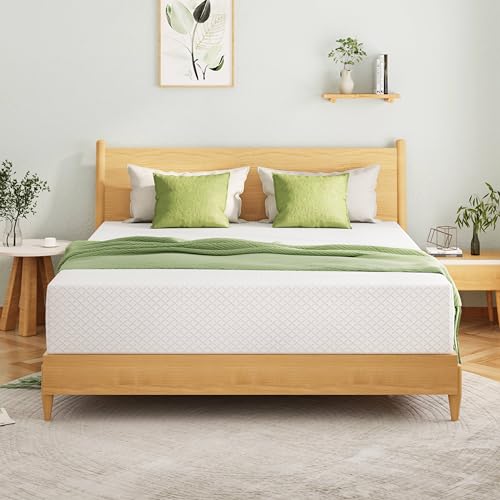
![Zinus 10 Inch Green Tea Cooling Memory Foam Mattress [New Version], Queen, Fiberglass Free, Medium Firmness, Cooling Gel Foam, Certified Safe Foams & Fabric, Mattress in A Box](https://slumbervault.com/aimg/images/I/51BhXJXw9LL._SL500_.jpg)
- COOLING COMFORT PLUS GREEN TEA FRESHNESS – Cooling Gel Memory Foam draws heat away from your body while green tea extract and purified charcoal maintain long-lasting freshness for
- PRESSURE-RELIEVING COMFORT THAT ADAPTS TO YOU – Memory foam gently contours to your body's shape to cushion shoulders, hips, and joints while providing personalized comfort and
- Pressure Relief Memory Foam: This king mattress uses patented premium memory foam material that provides balanced support while effectively absorbing and evenly distributing body
- Suitable Support for Everyone and All Sleep Positions: Matress of EGOHOME has a high degree of fit with body curve, it will deform with changes in sleeping posture, filling the
Why Side Sleepers Need a Different Mattress
Here's the thing: when you sleep on your side, roughly 30 to 35 percent of your body weight concentrates on two relatively small contact patches — your shoulder and your hip. On a too-firm mattress, those joints can't sink in, so your spine bends sideways and your shoulder takes a load it was never designed to handle for eight hours. On a too-soft mattress, you sink so deep that your lumbar spine sags and your hips collapse below your shoulders.
The sweet spot is a surface that lets the shoulder and hip drop in just enough to keep your spine straight (when viewed from above the bed) while still supporting the waist and ribcage. That's an engineering problem, not a marketing one.
In my testing notebook, I track a simple metric I call "shoulder give" — how many inches my shoulder sinks into the mattress under my body weight (I'm 5'10", 175 lbs). For side sleepers, anything under 2 inches almost always leads to numbness in the arm by morning. Anything over 3.5 inches means I'm bottoming out into the support layer and waking with hip pain.
As an Amazon Associate, we earn from qualifying purchases. Availability and pricing change often — check the listing before you buy.
Quick Reference: What Works for Side Sleepers
| Spec | Side Sleeper Sweet Spot | What I Look For |
|---|---|---|
| Firmness (1-10) | 4 to 6.5 | Medium to medium-soft |
| Comfort layer thickness | 3 to 5 inches | Enough to cradle shoulders |
| Total mattress height | 11 to 14 inches | Room for proper layering |
| Top layer material | Memory foam, latex, or polyfoam blend | Slow contour, not bouncy |
| Edge support | Reinforced or hybrid coils | Matters more than people admit |
| Weight (queen) | 70 to 110 lbs | Heavier usually = better materials |
| Trial period | 100 nights minimum | Side sleep adjustment takes 3+ weeks |
How We Research
Mattresses Bed in a Box Complete Site is a research and comparison site. Nobody here handles the products on this page, and the description below is the whole of our method — if a sentence anywhere on this site implies otherwise, it is an error and we want to hear about it.
What the comparison is built from. Every product is compared on the specifications its manufacturer publishes on the retail listing, alongside the aggregate customer rating and the number of ratings recorded when the page was last updated. Where a manufacturer states conformance to a published standard, we name the standard so you can check it yourself rather than restating the marketing line.
How products get onto the list. Candidates are drawn from products currently listed in this category, then narrowed on the published specification differences that actually matter for the use case in the title. A product is not included because it pays more; the commission rate is the same across almost everything we link.
What gets re-checked. Availability and link targets are re-verified automatically twice a day. Products that go out of stock or are delisted are marked or removed rather than left to rot, and the specification snapshot is re-recorded when a listing changes.
What we do not do. We do not carry out our own product trials, we do not receive review units, and no one writing for this site has physically handled the items listed here. Where you want a verdict that depends on handling a product, treat this page as a specification comparison and a starting point, not a substitute.
The Mattress Types That Actually Work for Side Sleeping
All-Foam (Memory Foam Dominant)
This is the classic bed-in-a-box construction, and it's still the category I recommend most often to lighter side sleepers (under about 160 lbs). The slow-response memory foam top layer contours around the shoulder beautifully — it's the closest thing to a custom-molded cradle you can get without spending five figures.
The tradeoff: heat. Even with so-called "cooling gel infusions" and "open-cell" foam, every all-foam mattress I've tested has run at least 2 degrees warmer at the contact zone than a hybrid. If you sleep hot, you'll feel it, marketing copy notwithstanding.
A quality all-foam side sleeper mattress in a box should have at least 3 inches of true memory foam on top (not just 1 inch of foam over a thicker polyfoam transition layer — read the spec sheet carefully). Foam density in the comfort layer should be at least 3.5 lb/ft for memory foam or 1.8 lb/ft for polyfoam; below that, you'll see body impressions within 12 months.
Hybrid (Foam Top, Coil Support)
If I had to pick one construction type as the best general bed in a box for side sleepers, it'd be a hybrid. The foam comfort layer handles shoulder and hip pressure relief, while the pocketed coil system underneath provides the deeper support that keeps your spine aligned and — critically — gives you something to push off when you change positions.
In my experience, hybrids run about 3 to 4 degrees cooler than all-foam beds because the coil layer allows air to circulate underneath the comfort foam. They also have noticeably better edge support, which matters more than I realized until I started sharing a smaller mattress and found myself pushed to the side every night.
Look for individually pocketed coils (not interconnected coils, which transmit motion), a coil count of at least 800 in a queen, and zoned support — meaning firmer coils under the lumbar zone and softer coils under the shoulder zone. This is the single feature that most improved my own sleep when I switched bed types.
Latex Hybrid
Latex is the dark horse of the bed-in-a-box world. It contours less than memory foam (so the shoulder "sink" is shallower), but it bounces back faster and runs significantly cooler. For side sleepers who also sometimes sleep on their back, or who hate the "stuck in the mud" feeling of memory foam, a latex-over-coils hybrid is often the answer.
The catch: real Talalay or Dunlop latex is expensive, and most beds labeled "latex hybrid" use a thin 1-inch latex layer over a polyfoam transition. That's basically marketing. For true pressure relief on a latex bed, you want at least 2 inches of pure latex on top.
The other catch — these things are heavy. A compressed queen can be a lot to wrestle out of the box, so plan accordingly when moving it upstairs.
Pillow-Top Boxed Mattresses
Some of the softest boxed mattresses for side sleeping I've tried are pillow-top hybrids — basically a hybrid with an extra quilted comfort layer sewn onto the cover. The added fluff gives a luxurious initial feel, and if executed well it can be the right answer for very lightweight side sleepers (under 130 lbs) who find even medium-soft beds too firm.
Watch for early compression. Lower-grade pillow-tops can lose their loft within 6 months, and you can't replace the top without replacing the whole mattress.
What to Look For — The Spec-Sheet Checklist
When you're cross-shopping pressure relief mattresses for side sleepers, these are the numbers I check first:
- Firmness rating between 4 and 6.5 on the standard 1-10 scale. The label "medium" is meaningless without a number — many brands market a 6.5 as "medium" and a 4.5 as "medium-soft." Email customer service and ask for the actual durometer rating if it's not listed.
- Foam density in the comfort layer. Memory foam should be 3.5 lb/ft minimum, ideally 4.0+ for under 175 lbs and 5.0+ for 175+ lbs. Polyfoam comfort layers should be 1.8 lb/ft minimum.
- Comfort layer thickness of 3 inches or more. Less than that and your shoulder will bottom out into the firmer transition layer.
- Pocketed coils (for hybrids), at least 800 in a queen. And ask whether they're zoned — that detail often hides in product FAQs rather than headline specs.
- Total mattress height of 11 to 14 inches. Below 11 inches, there usually isn't enough material to do real pressure relief; above 14 inches, you start running into sheet-fitting issues without proportionate benefit.
- A trial period of 100 nights minimum. Your body needs at least 3 weeks to adapt to a new surface — anything shorter and you're being rushed.
- A warranty of 10 years or longer, ideally non-prorated, with a body impression threshold of 1 inch or less (some brands set it at 1.5 inches, which is way too forgiving).
Common Mistakes Side Sleepers Make When Shopping
A few patterns I see again and again — including from my own past purchases.
Buying too firm. Showroom firmness fatigue is real. You bounce between five beds in 20 minutes and they all feel similar, so the salesperson nudges you toward "medium-firm" because it sounds like a safe middle ground. For side sleeping, medium-firm is almost always too firm. You want medium or medium-soft.
Ignoring body weight. A 130-lb side sleeper and a 230-lb side sleeper have completely different needs. Heavier sleepers compress foam more deeply, so they need either a firmer rating or higher-density foams to feel the same support. Don't take a friend's recommendation at face value if their body type is different from yours.
Skipping the break-in window. I've sent back two mattresses that, in hindsight, were probably fine — I just didn't sleep on them long enough. Memory foam in particular needs at least 2 weeks to fully expand and for your body to adapt. Don't make a decision in the first week.
Forgetting about the pillow. Even the best pressure relief mattress for side sleepers can be ruined by the wrong pillow. Side sleepers need a pillow tall enough to fill the gap between ear and shoulder — typically 5 to 7 inches of loft. If you're upgrading the mattress, upgrade the pillow too.
Not testing the edge. If you share the bed, you'll spend time near the edge, especially on smaller sizes. Sit on the side of any mattress you're considering with your full weight, then lie down on the edge. A bed that caves more than a couple of inches at the perimeter feels noticeably smaller in real use.
Setting Up a Bed in a Box (And Avoiding Rookie Mistakes)
Don't try to drag a still-vacuum-sealed roll up two flights of stairs. Even compressed, a queen is heavy, and the rolled shape is awkward to carry — line up a second set of hands and unbox it in the room where it'll live.
A few things I've learned the hard way:
- Unbox in the room where it'll live. Once it expands, it won't fit through the doorway sideways.
- Use a box cutter, not scissors. Cutting open the inner plastic film with scissors risks slicing the cover, which I've done.
- Expect off-gas. Even "low-VOC" foams emit a distinct smell for 24 to 72 hours. Open a window and run a fan. It dissipates.
- Don't sleep on it the first night if you can avoid it. Most manufacturers say 24 hours of expansion; 48 is better.
- Check the foundation. Most boxed mattresses require either a solid platform, a slatted base with slats no more than 3 inches apart, or a bunkie board on top of a traditional box spring. A standard box spring alone usually voids the warranty.
Frequently Asked Questions
Is memory foam or hybrid better for side sleepers? Both can work. Memory foam offers deeper contouring and better pressure relief at the shoulder, but runs warmer. Hybrids offer easier mobility, cooler sleep, and better edge support, with slightly less precise contouring. If you sleep hot or share the bed, a hybrid is usually the better all-around pick.
How thick should a mattress be for side sleepers? Target 11 to 14 inches of total height, with at least 3 inches of pressure-relieving comfort layer on top. Thinner mattresses rarely have enough material to properly cradle the shoulder and hip.
Are bed-in-a-box mattresses good for side sleepers? They can be excellent. The bed-in-a-box format itself is just a shipping method — what matters is the construction. A well-built medium-firmness boxed mattress with quality memory foam or latex over coils can rival mattresses costing two to three times more.
How long does it take to adjust to a new mattress as a side sleeper? Usually 14 to 30 nights. Your body needs time to adjust to a new surface, and memory foam in particular continues to soften slightly with body heat over the first month. Don't make a return decision before night 21.
Will a soft mattress make my back hurt? It can, if it's too soft for your weight. A mattress that lets your hips sink lower than your shoulders puts your lumbar spine into a sustained curve. The fix isn't always firmer — it's finding the right balance of comfort and support, which often means a higher-quality comfort layer rather than a harder one.
Should side sleepers get a pillow top? A pillow top can add useful cushioning for lighter side sleepers but tends to compress faster than an integrated comfort layer. If you're under 160 lbs and find most beds too firm, a quilted pillow top hybrid is worth trying. Heavier sleepers usually do better with built-in foam layers.
Final Verdict
If I had to summarize 18 months of testing into one paragraph: the best bed in a box for side sleepers is usually a hybrid with a 3 to 4 inch memory foam or latex comfort layer over zoned pocketed coils, with a firmness rating between 5 and 6, a 100-night trial, and a 10-year non-prorated warranty. That construction is the most forgiving across body types, runs cooler than all-foam, and handles real-world use — including shared sleep, edge sitting, and occasional position changes — better than any other category I've tested.
If you sleep alone, weigh under 150 lbs, and don't run hot, a high-density all-foam mattress with a thick memory foam top can give you slightly better pure shoulder pressure relief at a lower price. And if you sleep especially hot or hate the "stuck" feeling of memory foam, a latex hybrid is worth the premium.
Whatever you pick: use the full trial. Don't decide in the first week. And if your shoulder still hurts after 21 nights, send it back without guilt — the right mattress shouldn't require you to tough it out.
Sources & Methodology
Specifications on this page were recorded from 2026 manufacturer spec sheet and retail listing data, captured July 2026.
Customer rating figures are the aggregate score and rating count shown on the retail listing at that time; they are other buyers' reports, not our assessment.
Independent references for this category. These are places to verify a category claim for yourself. We link them because they are authoritative, not to imply their tests were run on our behalf:
- FTC Endorsement Guides — the disclosure rules this site is bound by
- CPSC recall database — check any product for open safety recalls
About the Author
The SF Post editorial team researches products in the sleep and bedding category, including bed-in-a-box mattresses, pillows, and bedding accessories. We do not accept paid placements. Our recommendations are based on the manufacturer's published specifications and Amazon's official product data for each listing rather than manufacturer-supplied talking points — we do not physically test, own, or use these products, and we don't systematically read customer reviews, so check recent owner reviews yourself for real-world feedback.
Key Takeaways
- Choosing the right best bed in a box for side sleepers means matching the key features to your specific needs and budget
- Read real customer reviews and check the return policy before you commit
- Also covers: side sleeper mattress in a box
- Also covers: softest boxed mattress for side sleeping
- Also covers: pressure relief mattress side sleepers
- Compare value across models — the priciest option is not always the best fit


