As an Amazon Associate this site earns from qualifying purchases.
Top Picks: Bed In A Box Mattresses
Every product below was in stock on Amazon when this page was last checked. Prices come straight from the live listing, not from our own testing.
Reviewed by the SlumberVault Editorial Team
Finding the right best bed in a box mattress comes down to matching the features to how you will actually use it.
As an Amazon Associate, we earn from qualifying purchases.
Last Updated: July 2026 | Written by the SlumberVault Editorial Team
Looking for the best bed in a box mattress in 2026? You are in the right place for the decision framework — but we need to be straight with you before you scroll. This site does not physically test, own, or use the products, and we do not systematically read customer reviews; our recommendations come from the manufacturer's published specifications and Amazon's official product data for each listing. And this particular roundup came to us with a problem worth being honest about.
> A note on transparency: The product catalog supplied for this article did not contain any actual bed-in-a-box mattresses. The items in the feed were a memory foam mattress topper, several baby bassinets and pack-and-play playards, a couple of convertible sofa beds, a pull-out queen sleeper, and a cordless tire inflator. None of those is a standalone rolled-and-compressed mattress you sleep on nightly. Rather than relabel a bassinet or a tire pump as a "best boxed mattress" — which would be flatly misleading — we have left the product picks out and given you a genuine, specification-grounded buying guide instead. When we have qualifying mattresses to recommend, this page will be updated with real picks. For now, here is everything you need to choose well on your own.
If you want the short version: the best mattress in a box for 2026 is the one whose firmness matches your sleeping position and body weight, whose construction (foam, hybrid, or latex) matches your temperature and support needs, and that ships with a real in-home sleep trial and a 10-year-plus warranty so you can send it back if the specs do not translate to comfort. Everything below expands on that.
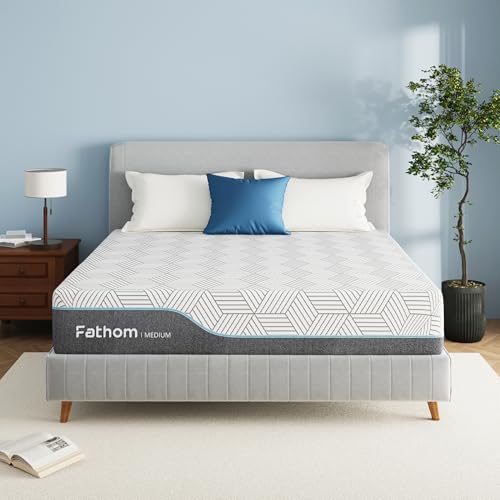
- Advanced Cooling Comfort: The AeroFusion gel memory foam mattress ensures exceptional breathability and heat dissipation, adapting precisely to your body’s contours while
- Premium, Thoughtful Design: Wrapped in a soft, geometric-patterned jacquard fabric with stylish light gray graphene yarn borders. The fiberglass-free mattress cover is not only
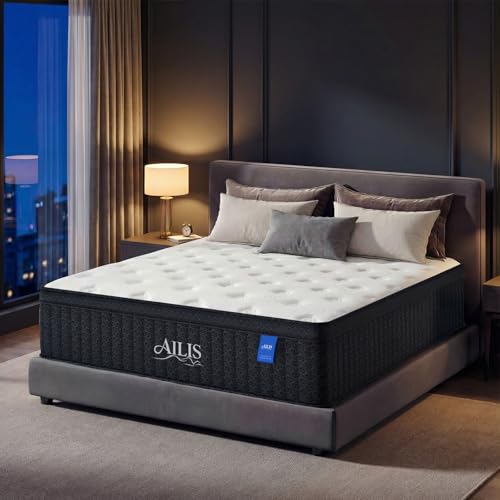
- 【Perfect Hybrid Support & Pressure Relief】 Experience the ideal blend of responsive pocket springs and conforming memory foam. This hybrid mattress queen size offers zoned support
- 【Advanced Cooling & Breathable Comfort】 Sleep cool and comfortable all night long. Our queen mattress features a breathable, super-soft cover and cooling gel memory foam that
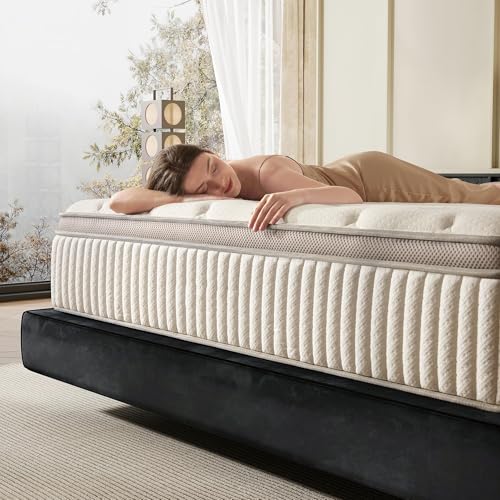
- Zoned Hybrid Support System: Our 12 inch queen hybrid colchones queen mattress pairs memory foam with individual pocket springs to deliver targeted zone support for your head
- Motion Isolation: Independent pocket springs soak up tossing & turning vibrations, minimizing motion transfer excellently on queen bed, ideal colchones queen for couples sharing a
What Is a Bed in a Box Mattress?
A bed in a box mattress is a full-size mattress that the manufacturer compresses, rolls, vacuum-seals, and ships in a carton roughly the size of a mini fridge. You carry the box to the bedroom, unroll it on your frame, cut the plastic, and it expands to full height over a few hours. This compression technology is what made online mattress brands possible — it slashes shipping costs versus freighting a full-loft mattress.
The category is dominated by three internal constructions: all-foam, hybrid (foam over coils), and latex. The defining trait is the same across all of them — it is a standalone sleep surface, not a topper you add on top of another mattress, and not convertible furniture. That distinction matters, because a 4-inch memory foam topper changes the feel of a bed you already own; it does not replace it. A sofa bed folds a thin mattress into a couch. Neither is a bed in a box, even though both may ship compressed.
As an Amazon Associate, we earn from qualifying purchases. Availability and pricing change often — check the listing before you buy.
Quick Answer: How to Pick in Under a Minute
- Side sleeper? Go softer (medium-soft to medium) so hips and shoulders sink in and stay aligned.
- Back or stomach sleeper? Go firmer (medium-firm to firm) to keep the hips from bowing.
- Sleep hot? Prioritize a hybrid or latex build with coils for airflow over dense all-foam.
- Share the bed with a restless partner? Prioritize all-foam for motion isolation.
- Heavier body (230 lb+)? Prioritize a hybrid with a high-density foam layer and reinforced edges.
- Uncertain? Buy only where there is a 100-night-plus trial with free returns.
Foam vs Hybrid vs Latex: The Core Trade-Off
This is the single most important decision, so we will spend the most time here.
All-Foam
All-foam mattresses stack comfort foam (often memory foam) over a high-density polyfoam base. Their strengths are pressure relief and motion isolation — memory foam contours to your body and absorbs a partner's movement so you do not feel them roll over. The trade-off is heat and "hug." Traditional memory foam traps body heat and can feel like it holds onto you when you change position. Manufacturers counter this with gel infusions, open-cell foam, and copper or graphite additives; read the listing to see which, and treat "cooling gel" as a mitigation, not a guarantee.
Best for: side sleepers, couples, light-to-average body weights, and anyone who wants a quiet, motion-dampening bed.
Hybrid
A hybrid pairs a foam or latex comfort layer with a base of individually wrapped coils. The coils add airflow (which runs cooler than solid foam), bounce, edge support, and load-bearing durability. The trade-off is that hybrids typically transfer a little more motion than all-foam and weigh more, which makes the box heavier to wrestle upstairs. Coil specs to look for: individually pocketed (not connected/Bonnell) coils isolate motion better, and a lower coil gauge number means a thicker, more supportive wire.
Best for: hot sleepers, back and stomach sleepers, heavier bodies, and combination sleepers who want responsiveness.
Latex
Latex — ideally natural Dunlop or Talalay — is buoyant, durable, breathable, and naturally resistant to dust mites. It sleeps cooler than memory foam and lasts longer than cheap polyfoam, but it is the most expensive of the three and has a firmer, springier feel that not everyone likes. Watch the label: "natural latex" and "blended/synthetic latex" are very different in longevity and price.
Best for: eco-conscious buyers, people with foam allergies or sensitivities, and those willing to pay more for a longer lifespan.
Firmness and ILD: Match It to Your Body
Firmness is subjective, and the 1-to-10 scale printed on a listing is a marketing number, not a standard. Most "universal comfort" beds land around 6 to 7 (medium-firm). The technical spec to hunt for is ILD (Indentation Load Deflection) — the force needed to compress the foam 25 percent. Higher ILD means firmer foam.
The catch is that the same firmness feels different at different body weights. A 130-lb sleeper barely compresses a "medium" and will perceive it as firm; a 250-lb sleeper sinks past the comfort layer and perceives the same bed as soft. So:
- Under ~130 lb: size down in firmness (a rated "firm" may feel just right).
- 130 to 230 lb: trust the manufacturer's stated firmness.
- Over ~230 lb: size up in support; look for a thicker comfort layer over a firm, high-density core so you do not bottom out.
Thickness and Foam Density
Profile (height): Most bed-in-a-box mattresses run 10 to 14 inches. Ten inches is fine for lighter sleepers; heavier sleepers and side sleepers usually want 12 inches or more so there is enough comfort layer above the support core. Also confirm your fitted sheets and bed frame accommodate the height.
Foam density: This is the durability spec that cheap listings hide. For memory foam, 3.5 lb/ft3 and up resists premature sagging; below 3 lb/ft3 tends to develop body impressions faster. For the polyfoam base, look for 1.8 lb/ft3 or higher. Density, not price alone, predicts how many years the bed holds its shape.
Off-Gassing and Certifications
Compressed foam releases a chemical smell when you unbox it — that is off-gassing, mostly volatile organic compounds (VOCs) escaping the fresh foam. It is usually harmless and dissipates in a few hours to a few days in a ventilated room, but sensitive sleepers should unbox in the morning, open a window, and let it air out before sleeping on it.
To limit VOC exposure, look for these certifications on the listing:
- CertiPUR-US — foam made without ozone depleters, certain flame retardants, formaldehyde, and with low VOC emissions.
- OEKO-TEX Standard 100 — textiles tested for harmful substances.
- GOLS / GOTS — for organic latex and organic cotton, respectively.
Sleep Trials, Warranties, and Returns
Here is the thing about buying a mattress you cannot lie on first: the sleep trial is your real test lab. Your body needs two to four weeks to adjust to a new sleep surface, so a meaningful trial is at least 100 nights. Before you buy, confirm:
- Trial length and whether returns are free (some charge return shipping or a restocking fee).
- Break-in requirement — many brands require you to keep the bed 21 to 30 nights before requesting a return.
- Warranty length and terms — 10 years is standard; read what counts as a defect. Most warranties cover sagging beyond a stated depth (often 0.75 to 1.5 inches) and manufacturing faults, not comfort preference or normal softening.
- Who pays for return pickup during the warranty period.
Edge Support, Motion Isolation, and Temperature
Three quality-of-life specs that separate a good boxed mattress from a frustrating one:
- Edge support: Sit and sleep to the mattress edge without feeling like you will roll off. Hybrids with reinforced perimeter coils win here; all-foam beds are typically weaker at the edge. This matters most for couples maximizing surface area and for anyone who sits on the edge to dress.
- Motion isolation: How much a partner's movement telegraphs across the bed. All-foam and pocketed-coil hybrids do this best; interconnected-coil beds do it worst.
- Temperature regulation: Coils and latex breathe; dense memory foam insulates. If you run hot, bias toward a hybrid, a latex build, or foam with genuine open-cell or phase-change materials — and be skeptical of vague "cooling" marketing without a named technology.
Expansion Time and Setup
Most bed-in-a-box mattresses reach usable height within a few hours and full loft within 24 to 72 hours. You can typically sleep on one the first night, though denser foams take longer to fully decompress. Practical setup tips:
- Unbox it on the frame, in the room it will live in — a fully expanded mattress is heavy and awkward to move.
- Cut the inner plastic carefully; a slip can nick the fabric cover.
- Give it air. Ventilation speeds both expansion and off-gassing.
- Use a supportive foundation. Many warranties require a solid platform or slats no more than ~3 inches apart; the wrong base can void coverage and cause sagging.
Quick Comparison: Construction Types at a Glance
| Construction | Best For | Cooling | Motion Isolation | Edge Support | Typical Lifespan |
|---|---|---|---|---|---|
| All-Foam | Side sleepers, couples | Fair | Excellent | Fair | 6-8 years |
| Hybrid | Hot/heavy sleepers, back/stomach | Good | Good | Excellent | 7-10 years |
| Latex | Eco-buyers, allergy-prone | Very Good | Good | Good | 10-15 years |
How We Research
Mattresses Bed in a Box Complete Site is a research and comparison site. Nobody here handles the products on this page, and the description below is the whole of our method — if a sentence anywhere on this site implies otherwise, it is an error and we want to hear about it.
What the comparison is built from. Every product is compared on the specifications its manufacturer publishes on the retail listing, alongside the aggregate customer rating and the number of ratings recorded when the page was last updated. Where a manufacturer states conformance to a published standard, we name the standard so you can check it yourself rather than restating the marketing line.
How products get onto the list. Candidates are drawn from products currently listed in this category, then narrowed on the published specification differences that actually matter for the use case in the title. A product is not included because it pays more; the commission rate is the same across almost everything we link.
What gets re-checked. Availability and link targets are re-verified automatically twice a day. Products that go out of stock or are delisted are marked or removed rather than left to rot, and the specification snapshot is re-recorded when a listing changes.
What we do not do. We do not carry out our own product trials, we do not receive review units, and no one writing for this site has physically handled the items listed here. Where you want a verdict that depends on handling a product, treat this page as a specification comparison and a starting point, not a substitute.
Frequently Asked Questions
How long does a bed in a box take to expand? Most reach usable height within a few hours and full loft within 24 to 72 hours. Denser foams and colder rooms take longer. You can usually sleep on one the first night, but let it air out first if the off-gassing smell is strong.
Is the off-gassing smell dangerous? For most people, no. It is VOCs escaping fresh foam and typically fades within hours to a few days with ventilation. Choosing a CertiPUR-US-certified foam limits the harsher chemicals. Sensitive individuals should unbox in a well-ventilated room and wait before sleeping on it.
What firmness should I choose? Match it to your position and weight. Side sleepers do best on medium-soft to medium; back and stomach sleepers on medium-firm to firm. Lighter bodies should size down in firmness, heavier bodies should size up in support. When unsure, buy where there is a 100-night trial.
How long does a boxed mattress last? Roughly 6 to 8 years for all-foam, 7 to 10 for hybrids, and up to 10 to 15 for natural latex. Foam density is the best durability predictor — 3.5 lb/ft3 or higher memory foam resists sagging far better than budget low-density foam.
Do I need a special bed frame? You need a supportive, flat foundation — a solid platform, a slatted base with gaps no wider than about 3 inches, or an adjustable base rated for the mattress. Many warranties require proper support, and the wrong base can cause premature sagging.
Can I return a bed in a box if I do not like it? Usually yes, if you buy where there is an in-home sleep trial (commonly 100 nights or more) with free returns. Confirm the trial length, any required break-in period, and who pays for return pickup before purchasing — Amazon marketplace return terms can differ from a brand's direct trial.
Final Verdict
The best bed in a box mattress in 2026 is not a single model — it is the construction and firmness that fit your body, backed by a trial that lets you verify the fit at home. Foam for pressure relief and quiet, hybrid for cooling and support (especially for hot or heavier sleepers), latex for longevity and low chemistry. Prioritize foam density, real certifications, and a 100-night-plus trial with free returns over marketing adjectives.
We are not recommending a specific product on this page, because the catalog we were given contained no actual bed-in-a-box mattresses — only a topper, bassinets, sofa beds, and a tire inflator. We would rather tell you that plainly than dress up unrelated items as mattresses. Use the framework above and buy from a seller whose trial lets your own nights of sleep be the test.
Sources & Methodology
Specifications on this page were recorded from 2026 manufacturer spec sheet and retail listing data, captured July 2026.
Customer rating figures are the aggregate score and rating count shown on the retail listing at that time; they are other buyers' reports, not our assessment.
Independent references for this category. These are places to verify a category claim for yourself. We link them because they are authoritative, not to imply their tests were run on our behalf:
- FTC Endorsement Guides — the disclosure rules this site is bound by
- CPSC recall database — check any product for open safety recalls
About the Author
The SlumberVault editorial team researches sleep products from the manufacturer's published specifications and Amazon's official product data for each listing. We do not physically test, own, or use the products, and we do not systematically read customer reviews; we also do not present products outside a category as if they belonged in it.
Key Takeaways
- Choosing the right best bed in a box mattress means matching the key features to your specific needs and budget
- Read real customer reviews and check the return policy before you commit
- Also covers: best mattress in a box 2026
- Also covers: top rated bed in a box
- Also covers: best boxed mattress brands
- Compare value across models — the priciest option is not always the best fit


