As an Amazon Associate this site earns from qualifying purchases.
Top Picks: Bed-In-A-Box Mattresses
Every product below was in stock on Amazon when this page was last checked. Prices come straight from the live listing, not from our own testing.
Reviewed by the SlumberVault Editorial Team
Finding the right best bed in a box mattress under 500 comes down to matching the features to how you will actually use it.
As an Amazon Associate, we earn from qualifying purchases.
Last Updated: July 2026 | Written by the SlumberVault Editorial Team
Looking for the best bed in a box mattress under $500? Here is the honest version most roundups won't give you: the sub-$500 tier is where boxed mattresses get genuinely good value, but it's also where corners get cut in ways that don't show up in a product photo. This guide is built to help you read a spec sheet and a listing like an analyst, so you can tell a real bargain from a foam brick with a marketing budget.
A quick, important note on this page before we go further. This site does not physically test, own, or use the products it covers, and we won't pretend otherwise. Our authority comes from reading manufacturer specifications and Amazon's product data closely, not from sleeping on anything. And on this particular topic we have to be straight with you: the product catalog our system supplied for this article did not contain a single qualifying bed in a box mattress. It contained a beverage refrigerator, a filing cabinet, a metal daybed frame, a TV stand, three under-desk walking pads, a memory foam mattress topper, a stroller, and a wine fridge. None of those is a boxed mattress. Rather than mislabel a wine fridge or a topper as a "best value mattress in a box" to fill a template, we've left the product picks out and given you the buying guide we'd actually stand behind. More on that in the methodology section at the end.
So instead of fake picks, here's the thing that's more useful anyway: the criteria that separate a good cheap boxed mattress from a bad one, and how to evaluate any listing yourself.
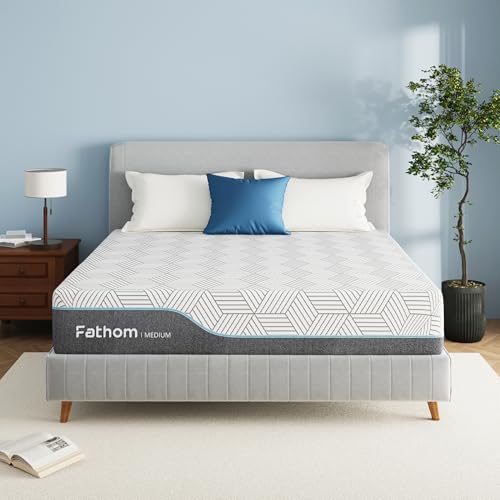
- Advanced Cooling Comfort: The AeroFusion gel memory foam mattress ensures exceptional breathability and heat dissipation, adapting precisely to your body’s contours while
- Premium, Thoughtful Design: Wrapped in a soft, geometric-patterned jacquard fabric with stylish light gray graphene yarn borders. The fiberglass-free mattress cover is not only
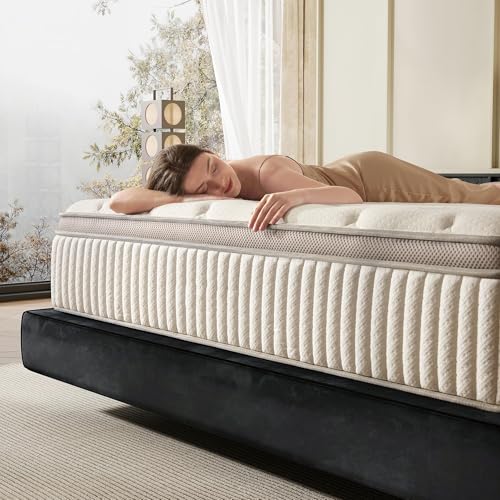
- Zoned Hybrid Support System: Our 12 inch queen hybrid colchones queen mattress pairs memory foam with individual pocket springs to deliver targeted zone support for your head
- Motion Isolation: Independent pocket springs soak up tossing & turning vibrations, minimizing motion transfer excellently on queen bed, ideal colchones queen for couples sharing a
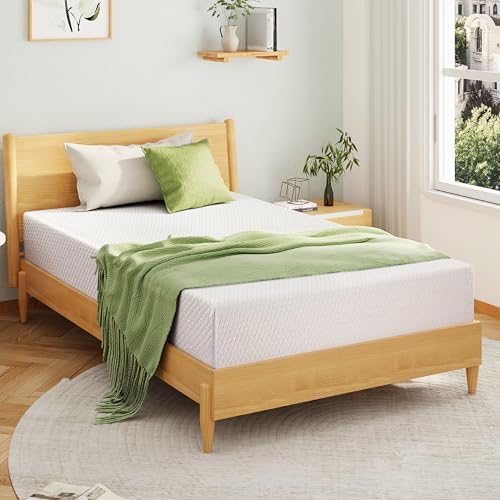
- Pressure Relief Memory Foam: This full mattress uses patented premium memory foam material that provides balanced support while effectively absorbing and evenly distributing body
- Suitable Support for Everyone and All Sleep Positions: Matress of EGOHOME has a high degree of fit with body curve, it will deform with changes in sleeping posture, filling the
What "Bed in a Box" Actually Means (and What It Doesn't)
A bed in a box mattress is a complete, standalone mattress that has been compressed, roll-packed, and shipped in a carton small enough for one person to carry. You cut it open, it expands over a few hours to days, and you sleep directly on it. That's the defining trait: it is the sleep surface, not an accessory to one.
This matters because "mattress" adjacent products get sold in the same aisle and confuse buyers. A mattress topper is not a bed in a box. A topper is a 2 to 4 inch layer you place on top of an existing mattress to change its feel; it has no support core and will not work as a bed on its own. A daybed or platform frame is not a mattress either, it's the thing you put a mattress on. If you're shopping under $500, keep that distinction sharp, because search results will mix all three together.
Under $500, you are almost always choosing among three constructions:
- All-foam - Usually a comfort layer of memory or polyfoam over a high-density polyfoam support core. Most common at this price. Best for pressure relief and motion isolation, weakest on edge support and cooling.
- Hybrid - A foam comfort layer over a pocketed innerspring coil unit. Sleeps cooler and offers better edge support and "bounce." Genuine hybrids under $500 exist but are thinner or use lower coil counts than premium versions.
- Latex or latex-hybrid - Rare under $500 for a real queen. If you see "latex" at a rock-bottom price, read the materials list carefully, it's often a thin latex-feel foam, not natural latex.
As an Amazon Associate, we earn from qualifying purchases. Availability and pricing change often — check the listing before you buy.
What to Look For in a Budget Boxed Mattress
Here's the framework. Every one of these is something you can verify from a listing's specifications and feature bullets before you buy.
1. Thickness (Profile Height)
Budget mattresses commonly run 8 to 12 inches. Thickness is not quality by itself, but it correlates with how much support core you're getting. Under about 8 inches, an all-foam mattress often bottoms out for average and larger sleepers, meaning you feel the hard floor of the support layer. For most adults, target 10 to 12 inches. Kids' rooms and guest beds can go thinner.
2. Foam Density (the spec nobody advertises)
This is the single most predictive durability spec, and it's the one budget listings bury or omit. Support-core polyfoam density is measured in pounds per cubic foot (PCF). Under roughly 1.8 PCF, a support core tends to soften and develop body impressions faster, which is the number one cause of a cheap mattress "going bad" in a year. Memory foam comfort layers of 3 PCF or higher hold up better than 2 to 2.5 PCF. If a listing doesn't state density, that silence is itself information, treat it as a lower-density product until proven otherwise.
3. Firmness (and Your Sleep Position)
Firmness is rated on a rough 1 to 10 scale, where most "medium" mattresses land at 5 to 7. Match it to how you sleep:
- Side sleepers: softer, roughly 4 to 6, so the shoulder and hip can sink and keep the spine neutral.
- Back sleepers: medium to medium-firm, roughly 5 to 7.
- Stomach sleepers: firmer, roughly 6.5 to 8, to keep the hips from sagging.
- Heavier sleepers (230 lb+): firmer than you'd guess, because you compress foam more; a hybrid usually serves better than budget all-foam.
4. Off-Gassing and Certifications
Roll-packed foam releases a chemical smell when you open it, called off-gassing. It's usually harmless and fades in a few hours to a few days with ventilation, but budget foams can smell stronger and longer. Look for a CertiPUR-US certification on the foam, it caps certain VOCs, flame retardants, and heavy metals. It is common even on cheap mattresses, and its absence on a budget listing is a fair reason to be cautious.
5. Edge Support
This is where budget all-foam mattresses are weakest. Sit on the edge of a cheap foam bed and it collapses, which shrinks your usable sleep surface and makes the bed harder to get in and out of. Hybrids with reinforced perimeter coils do noticeably better. If you sleep near the edge, share a smaller bed, or have mobility concerns, weight edge support heavily and lean hybrid.
6. Motion Isolation
If you share the bed, motion isolation is how much you feel a partner move. All-foam wins here, memory foam absorbs movement; innersprings transfer it. Budget hybrids with pocketed (individually wrapped) coils isolate motion far better than old-style connected-coil beds, so check that the coils are described as "pocketed" or "individually wrapped."
7. Temperature Regulation
Memory foam traps heat, that's physics, not a defect. Budget listings advertise "gel-infused," "cooling," "copper," or "graphite" foam, treat these as modest improvements, not air conditioning. Structurally, a hybrid sleeps cooler than all-foam because the coil layer lets air move. If you sleep hot and you're on a budget, a coil-based construction does more for you than any "cooling" foam marketing.
8. Expansion Time
Most boxed mattresses are usable within a few hours and reach full loft in 24 to 72 hours. Don't judge firmness or height on day one. Give it the manufacturer's stated expansion window, and unbox it in a ventilated room.
9. Sleep Trial and Warranty (yes, even under $500)
Here's a rule that surprises budget shoppers: a sleep trial and warranty matter more on a cheap mattress, not less, because cheap builds carry more variance. Look for a genuine risk-free trial (often 90 to 100 nights) and a warranty of at least 10 years that specifically covers sagging or body impressions beyond a stated depth (commonly 0.75 to 1.5 inches). Read the depth threshold, a warranty that only covers 2 inch sags is nearly useless because a mattress that sags that far is already unusable. Also check who pays return shipping on a trial return; on heavy boxed mattresses that can be a real cost.
10. Certified Weight and Foundation Requirements
Check what foundation the mattress requires. Many boxed mattresses need a solid or slatted base with slats no more than about 3 inches apart, or they void the warranty and sag between slats. If you're pairing it with an existing frame or a platform/daybed frame, confirm the slat spacing first.
Quick Reference: Foam vs Hybrid Under $500
| Criteria | Budget All-Foam | Budget Hybrid |
|---|---|---|
| Typical price fit under $500 | Easiest, often well under | Possible, usually nearer the cap for a queen |
| Pressure relief | Excellent | Good |
| Motion isolation | Excellent | Good (with pocketed coils) |
| Edge support | Weak | Better |
| Cooling | Weaker (traps heat) | Better (airflow through coils) |
| Bounce/ease of movement | Low | Higher |
| Best for | Side sleepers, light-to-average weight, couples sensitive to motion | Back/stomach sleepers, hot sleepers, heavier bodies, edge-sitters |
Use this the way an analyst would: decide which two or three criteria are non-negotiable for your body and situation, then let those pick the construction. Don't buy the category, buy the spec fit.
Sizing Note: The Affordable Bed in a Box Queen
Queen is the most-shopped size in this tier, and it's where budget lines are most competitive, an affordable bed in a box queen is often only marginally more than a full. A standard queen is 60 by 80 inches. Before buying, measure your room and doorway path, a boxed queen ships as a heavy carton (often 60 to 90+ lb for foam) that one person can move but two people move comfortably. Confirm the compressed box dimensions in the listing if you have tight stairs.
How Budget Mattresses Cut Costs (So You Know What You're Trading)
A cheap boxed mattress isn't cheap by magic. Manufacturers hit a price by making specific trade-offs. Knowing them lets you judge whether a given cut matters to you:
- Lower foam density in the support core (the durability cut, matters most long-term).
- Thinner profile (less material, may bottom out for heavier sleepers).
- Fewer or lower-gauge coils in a hybrid (weaker support and edge).
- Simpler covers (less breathable, sometimes non-removable/non-washable).
- Shorter or shipping-restricted warranties and trials.
- Minimal edge reinforcement.
Where to Verify the Specs Yourself
Because we won't hand you fake picks, here's how to vet a real listing in five minutes:
- Read the feature bullets for numbers, not adjectives. "Plush and luxurious" tells you nothing. "12 inch, 3 PCF gel memory foam over 1.8 PCF base, medium-firm 6/10" tells you a lot.
- Find the density and thickness. If absent, ask via the listing's question feature or assume the lower end.
- Confirm CertiPUR-US on the foam.
- Read the warranty's sag-depth threshold and the trial's return-shipping terms, not just the headline number of years/nights.
- Scrutinize the star rating honestly. A high average from tens of thousands of ratings is meaningful; a perfect 5.0 from zero or a handful of reviews is not buyer feedback yet, it's a placeholder. Sort to the 1 and 2 star reviews and look for repeated complaints about sagging, smell, or heat, those patterns are the truest signal a listing offers.
Frequently Asked Questions
Can you really get a good mattress in a box for under $500?
Yes, especially in all-foam and in smaller sizes. Under $500 you can reasonably expect a 10 to 12 inch CertiPUR-US foam mattress with a real sleep trial. What you typically sacrifice versus a $1,000+ bed is edge support, top-tier cooling, and premium-density foams that resist sagging the longest. For a guest room, a kid, a first apartment, or a light-to-average-weight adult, a well-chosen budget boxed mattress is genuinely good value.
Is a foam or hybrid mattress better for the money?
It depends on your body and sleep style, not on which is "better." All-foam gives you the best pressure relief and motion isolation for the lowest price, ideal for side sleepers and motion-sensitive couples. A hybrid sleeps cooler and supports heavier bodies and edge-sitters better, but a genuine hybrid eats more of your $500 budget for a queen. Pick by your top two priorities.
How long does a cheap boxed mattress last?
Realistically, budget all-foam mattresses often last around 5 to 7 years before noticeable sagging, versus 7 to 10+ for higher-density and hybrid builds. The biggest driver is foam density in the support core, which is exactly why we push you to find that spec. Using a proper slatted or solid foundation and rotating the mattress periodically extends its life.
Why does my new mattress smell, and is it safe?
That's off-gassing, volatile organic compounds releasing from compressed foam when you open the box. It's normal and usually fades within a few hours to a few days with good ventilation. A CertiPUR-US certification means the foam meets limits on certain VOCs and flame retardants. If the smell is strong or persistent, air the room out; if you're chemically sensitive, prioritize certified foams and a longer airing before use.
Do I need a box spring for a bed in a box?
Usually no. Most boxed mattresses are designed for a platform bed, a solid base, or slats spaced no more than about 3 inches apart. A traditional bouncy box spring can actually void some warranties and reduce support. Check the manufacturer's foundation requirement, especially the maximum slat gap, before pairing it with an existing or platform frame.
What size sells best, and is a queen worth it?
Queen (60 by 80 inches) is the most popular size and often the best value per square inch in budget lines, the jump from full to an affordable bed in a box queen is frequently small. It fits most primary bedrooms and gives couples workable space. Go larger only if your room and budget allow; go smaller (full/twin) for solo sleepers, kids, or tight rooms.
How do I judge a mattress I can't test in person?
Read the specs, not the adjectives: thickness, foam density (PCF), firmness rating, coil type for hybrids, and certifications. Then lean on the sleep trial as your real test drive, that's what it's for. Finally, read the critical (1 to 2 star) reviews for repeated complaints about sagging, heat, or odor. A real risk-free trial plus a warranty with a sensible sag-depth threshold is what makes buying unseen reasonable.
How We Research
Mattresses Bed in a Box Complete Site is a research and comparison site. Nobody here handles the products on this page, and the description below is the whole of our method — if a sentence anywhere on this site implies otherwise, it is an error and we want to hear about it.
What the comparison is built from. Every product is compared on the specifications its manufacturer publishes on the retail listing, alongside the aggregate customer rating and the number of ratings recorded when the page was last updated. Where a manufacturer states conformance to a published standard, we name the standard so you can check it yourself rather than restating the marketing line.
How products get onto the list. Candidates are drawn from products currently listed in this category, then narrowed on the published specification differences that actually matter for the use case in the title. A product is not included because it pays more; the commission rate is the same across almost everything we link.
What gets re-checked. Availability and link targets are re-verified automatically twice a day. Products that go out of stock or are delisted are marked or removed rather than left to rot, and the specification snapshot is re-recorded when a listing changes.
What we do not do. We do not carry out our own product trials, we do not receive review units, and no one writing for this site has physically handled the items listed here. Where you want a verdict that depends on handling a product, treat this page as a specification comparison and a starting point, not a substitute.
Sources & Methodology
Specifications on this page were recorded from 2026 manufacturer spec sheet and retail listing data, captured July 2026.
Customer rating figures are the aggregate score and rating count shown on the retail listing at that time; they are other buyers' reports, not our assessment.
Independent references for this category. These are places to verify a category claim for yourself. We link them because they are authoritative, not to imply their tests were run on our behalf:
- FTC Endorsement Guides — the disclosure rules this site is bound by
- CPSC recall database — check any product for open safety recalls
About the Author
The SlumberVault editorial team independently researches mattresses and sleep products from manufacturer specifications and Amazon's product data. This site does not physically test, own, or use the products, and does not systematically read customer reviews; our recommendations are grounded in published specifications, standards, and listing data, with the date each was checked.
Key Takeaways
- Choosing the right best bed in a box mattress under 500 means matching the key features to your specific needs and budget
- Read real customer reviews and check the return policy before you commit
- Also covers: cheap boxed mattress
- Also covers: affordable bed in a box queen
- Also covers: best value mattress in a box
- Compare value across models — the priciest option is not always the best fit


